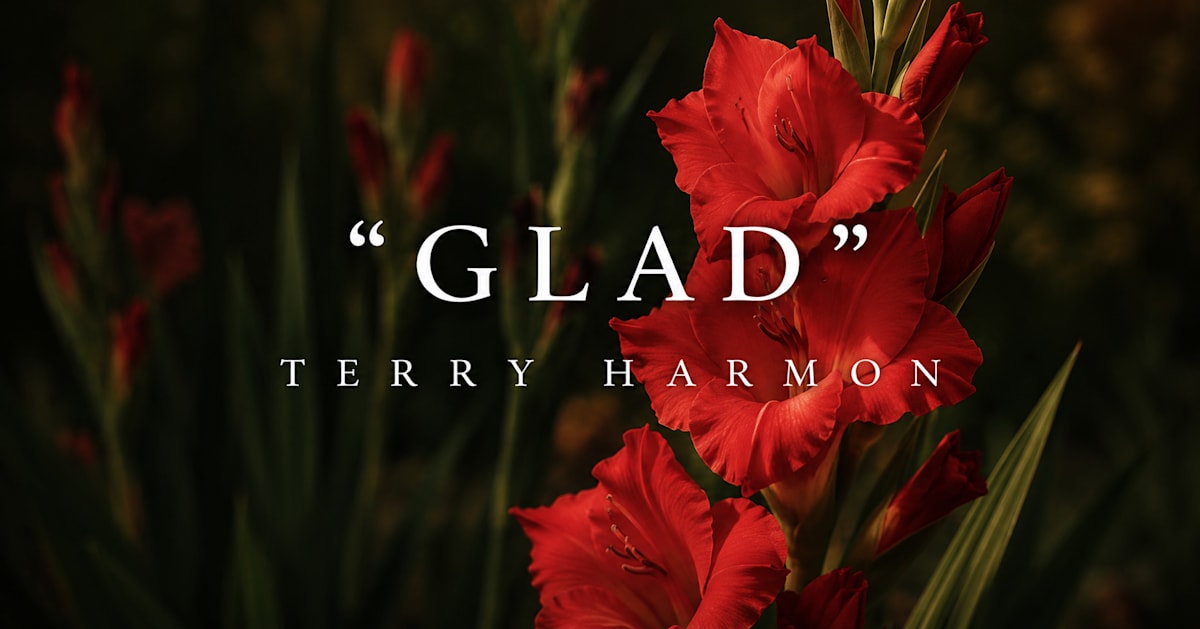
Yesterday, I mentioned that my gladioluses are in bloom.
For some time, I have known the proper spelling of this flower is “gladiolus” rather than “gladiola,” but I admit to not having been sure what to call multiples of them. According to Merriam-Webster, the plural of gladiolus can be “gladioluses” or “gladioli.”
Upon further reading, I learned that “gladiola” and “gladiolas” are the informal, Anglicized, singular and plural versions of the word. These versions are also referred to as “common,” which I think may just be a snooty, looking down your nose way of saying that only stupid, lazy English speakers say “gladiola(s).”
I admit to sometimes being stupid and lazy, and while I don’t know for sure where I fall on the intelligence bell curve, it’s a proven fact that 50% of all people have less than average intelligence. I suspect I may be classified as at least a mid-wit. And so, when I write, I often have to look up words that I think I understand so that I can ensure I am spelling or using them correctly.
In another example from yesterday, when I mentioned being able to identify the Big Dipper, I originally stated that my “astrological” knowledge was weak. But then I realized that “astrological” refers to astrology, and what I was really speaking of was astronomy. I double checked myself on the “interweb” and then made the edit lest I left anyone wondering if I care whether Virgo is rising or my moon is in its Seventh House.
But I digress. Back to gladioluses. Oftentimes, their long rows of successive blooms become top-heavy and outweigh the support of their stems. This evening, I used some twine and a porch post to lift a stem from the ground back to an upright position. And therein lies a lesson about things that weigh us down.
Hebrews 12:1 talks, in part, about laying aside every weight. Certainly, sin can be one of those weights, and this verse specifically addresses how troubling sin is to us.
But things other than sin can also weigh us down, even things that are fundamentally good and beautiful – just like gladiolus blossoms. For example, responsibility can be a good and beautiful thing – responsibility for our families, our friends, our homes, our jobs. But this can also become heavy at times and drag our “stems” to the ground.
The Apostle Paul discusses burdens in Galatians 6, and if we’re not careful, we can conclude that what he says in verse 5 contradicts what he says in verse 2. In verse 5, he writes, “For every man shall bear his own burden,” whereas in verse 2, he writes, “Bear one another’s burdens."
Regarding verse 5, I believe it tells us that we each need to assume responsibility and pull our own weight without becoming inordinately dependent on others. At times, though, as indicated in verse 2, the weight of our responsibilities can become too heavy and burdensome for us to handle individually. During certain intervals of life, we all need a helping hand – someone to come along, lift us from the ground, and bolster us with some “twine and a porch post.”
(The recesses of my mind have now begun cueing some accompanying background music. Think “Lean On Me” followed by “Bridge Over Troubled Water” and “You’ve Got A Friend.”)
We’re all tasked with handling our own affairs, but we need to be simultaneously in tune with the struggles of those around us and offer them our support. And when things become too heavy for us, we should not hesitate to receive assistance from others. It’s all a part of loving our neighbor as ourselves, and it’s often our ministrations to one another that Jesus uses to demonstrate His love and meet our needs.
To avoid the debate of “gladiolus” versus “gladiola,” some folks have simply reduced the word to “glad.” And as I share these thoughts, an additional meaning of that word is not lost on me. I am glad that God often uses the simplest things of life – even a flower – to teach us deeper things.
“Therefore, my heart is glad….” (Psalm 16:9)