About a week ago, I wrote about “a door of hope” that is mentioned in the biblical book of Hosea, and I want to continue some thoughts along that theme.
As a recap, God instructed the prophet Hosea to take a prostitute named Gomer as his wife. They would have three children – Jezreel (meaning “to sow/scatter”), Lo-Ruhamah (meaning “no pity/mercy”), and Lo-Ammi (meaning “not my people”). In the midst of these events, Gomer would be unfaithful to Hosea by committing adultery.
These dysfunctional family dynamics were to be a reflection of God’s broken relationship with the northern kingdom of Israel. Like an adulteress, Israel had forsaken God for idols, and God was using Hosea and his dismal home life to tell Israel of His impending judgment upon them. He would scatter their kingdom, have no mercy on them, and no longer recognize them as His people.
But then, just when it seemed all hope was lost, the story shifted, and God gave some glimmers of hope. He removed the “Lo” from Lo-Ruhama and Lo-Ammi, indicating that, following His judgments, which were necessary consequences of Israel’s disobedience and sin, He would be merciful and once more claim them as His people. He told Israel their children would be numbered as the sand of the sea, and He called them sons of the living God.
When God dropped the prefix “Lo” (meaning “no or “not”), everything changed. He removed something negative and changed it into a positive. And that’s exactly what God does for us when we enter into a relationship with Him through His Son Jesus Christ. He changes our status by taking away the negative consequences of our sin and adds positivity to our lives. Our conditions are transformed.
In Ephesians 2, Paul writes about this transformation in a mighty way: “You were dead in your trespasses and sins, in which you once walked according to the course of this world…. BUT GOD, who is rich in mercy, because of His great love with which He loved us, even when we were dead in trespasses, made us alive together with Christ….”
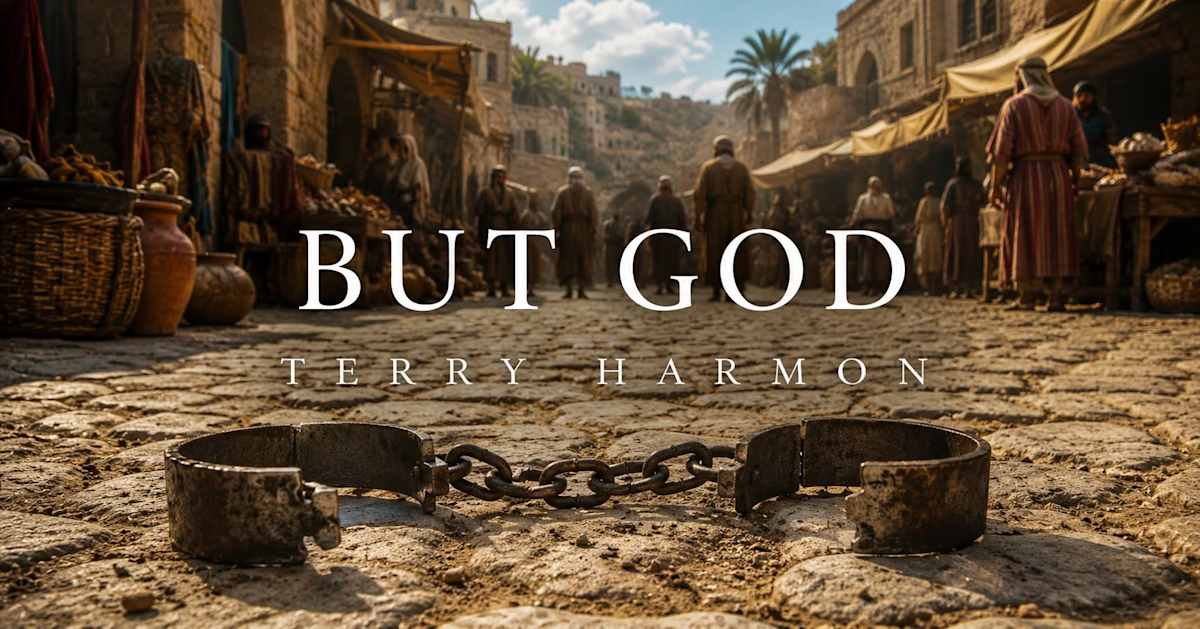
Returning to Gomer, she had abandoned her husband and children and gone back to the streets and her old profession, walking according to the course of the world, BUT GOD instructed Hosea to bring her home and once more love her as his wife. By the time he found her, she was a slave in the marketplace, and she was so used up that the monetary value placed on her by her owner was only half that of a regular slave.
In the Greek, Hosea was told to “exagorazo” Gomer. “Ex” means “out of,” and “agorazo” refers to the marketplace, which is where people in ancient Greece went to conduct business and buy things, including slaves. Simply put, God was telling Hosea to buy Gomer out of the marketplace, but in a fuller sense, He was telling him to ransom her from slavery…to completely redeem her.
For those of us who have personally experienced God’s redemption, the parallels cannot be lost on us. Like Gomer, we also were in bondage, shackled by sin and in need of a Savior. It is no accident that, in Hebrew, Hosea’s name is derived from “yasha,” meaning “salvation” or “deliverance.” In that sense, he is a foreshadowing or a type of Jesus ("Yeshua" in Hebrew and Aramaic), whose name means “Yahweh is salvation” or “God saves,” and translates into “Savior.”
Just as Hosea purchased Gomer and rescued her out of her slavery, so Jesus has purchased us and rescued us out of our slavery. While Hosea spent fifteen shekels of silver and a homer and a half of barley for Gomer’s deliverance, the price Jesus paid for our deliverance was much more costly – His own blood, shed for us on the Cross. I Peter 1:18-19 tells us that we were not redeemed with things like silver and gold, “but with the precious blood of Christ.”
So, in the book of Hosea we find the overarching and recurring theme of the Bible – the great love story – the gospel, the Good News – of God’s redemption and restoration. And how many times have we personally seen this demonstrated?
Things were dragging me down, BUT GOD…
I was heading in a wrong direction, BUT GOD…
Things looked really hopeless, BUT GOD…
I used to be a certain type of person, BUT GOD…
(Fill in the blank), BUT GOD…
Those changes, those shifts, those redirections, those about faces that God has accomplished in our lives and circumstances are what comprise our individual testimonies of His grace, mercy, forgiveness, and salvation. May we be faithful to share those testimonies with others, particularly those who are in need of one of their own.